
Chesterfield County VINELink Coverage
VINE is a custody-information and notification network. VINELink is its public web interface. The South Carolina Department of Corrections Victim Services office expressly identifies SC VINE for people in SCDC custody. That makes the service a documented channel for a Chesterfield County case that led to commitment to a South Carolina state prison, even when the prison itself is outside the county.
No official county coverage list in the research confirms that the Chesterfield County Detention Center or Chesterfield County Work Camp supplies records to VINELink. Ask the detention facility before relying on a missing result. The Detention Center can be reached at 843-623-2261. A person held only by the county will not appear in SCDC's state-prison system, and a person who has left a live roster may need to be confirmed through the jail's release record.
Search Chesterfield VINELink Records
Use VINELink for one person, not as a county-wide list of everyone recently released. Exact identifiers matter because names can repeat and spellings can vary. Keep the offender number from another official record when possible. Compare the returned identifier and location before treating any status as a match.
- Open VINELink and choose South Carolina.
- Select “Search for Someone,” then enter the exact name or offender ID.
- Complete the verification prompt and review all possible matches.
- Open the matching record only after checking its identifiers.
- Read the custody status, location, and reported change together.
The captured South Carolina VINELink search shows the state choice, person-search flow, and notification entry point.
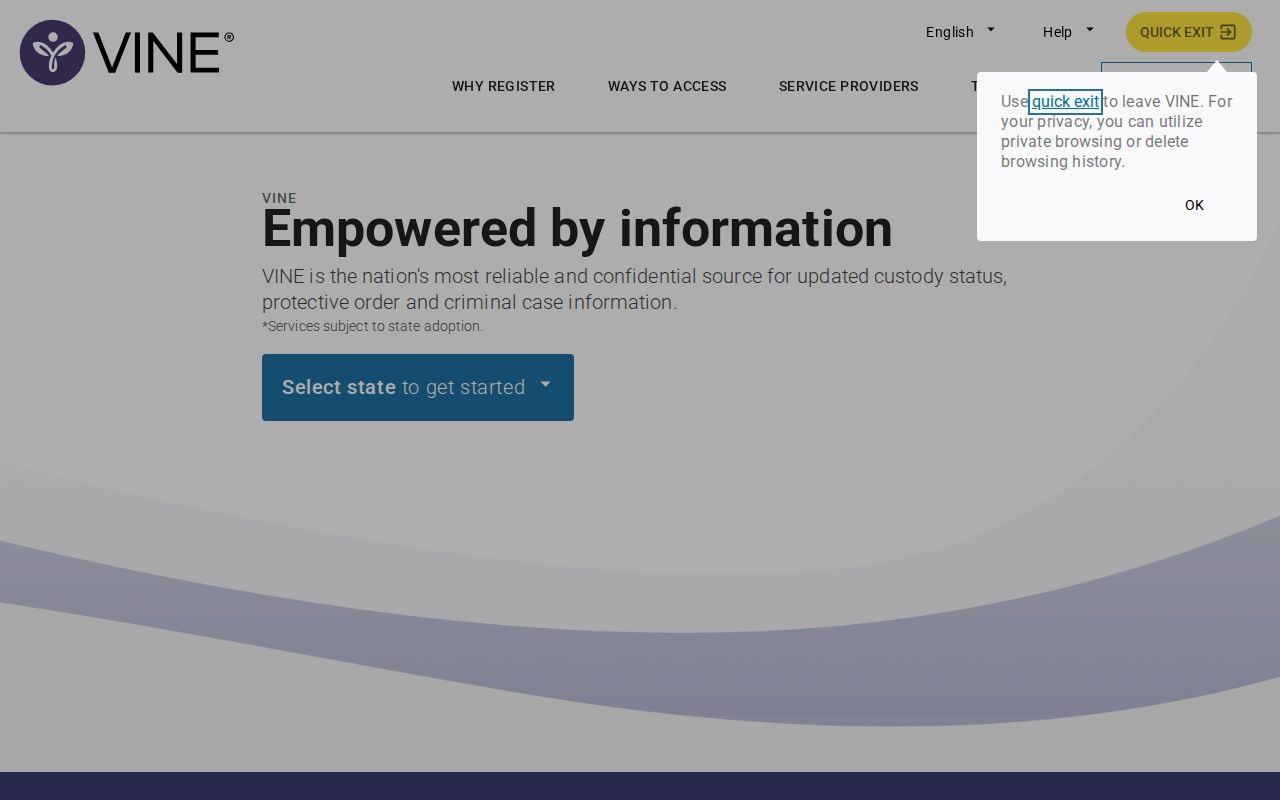
The screen supports a named-person check. It does not create a complete Chesterfield County release list, and its status reflects data sent by the participating custodian.
For a county case with no match, use the Chesterfield County released inmate search and records path. That route distinguishes the jail record, court case, state-prison record, and later supervision rather than treating one blank search as proof of release.
Chesterfield VINELink Release Fields
A result can provide enough detail to identify the supplying custodian and recognize a reported change. Field availability depends on the agency record. Read the result as a status notice, then compare it with the record held by the jail or SCDC.
| Field | What it can establish |
|---|---|
| Name and offender ID | Helps distinguish the correct person from similar names. |
| Custody status | Reports the status supplied by a participating agency. |
| Facility or location | Shows the current or last supplied custodian or placement. |
| Release or change event | Signals a reported release, transfer, or other custody change. |
| Notification option | Allows registration for supported future status alerts. |
“Release” can mean release from one custodian followed by a transfer to another. It does not certify a court disposition, erase a case, or prove that parole or probation ended. For an SCDC case, compare the notice with the separate SCDC Released Inmate Search. For a local jail case, request the Chesterfield release entry and any receiving-agency field.
Still-in-custody and released searches also differ. SCDC's ordinary offender portal covers current state prisoners as of the prior midnight. It excludes released people, county detainees, and community supervision. South Carolina uses a separate released-inmate tool for completed state-prison releases.
Set Chesterfield Release Alerts
After locating the correct record, choose “Get Notified.” Registration can support phone, text message, email, in-app notice, or supported TTY service. Availability can depend on the record and channel. More than one method can reduce the chance that a changed number or missed message blocks notice.
- Create an account or sign in if VINELink requests it.
- Add the verified person rather than a similar-name result.
- Select each desired phone, SMS, email, app, or TTY channel.
- Enter and verify the contact details for those channels.
- Create a four-digit PIN for automated phone calls.
- Enter the PIN when called to acknowledge the notice.
An unanswered call may produce a message and repeated attempts for at least 24 hours or until acknowledgment. Keep the PIN and offender identifier private. Update contact details promptly. National VINELink help is available at 1-866-277-7477.
Alerts may lag the physical event. A phone call, text, or email should prompt a check with the agency that held the person, especially when immediate safety or transportation decisions depend on the change.
South Carolina VINE Phone Check
South Carolina adds a state-prison telephone layer beyond the national web flow. SCDC lists 1-866-727-2846 as a free, public, 24-hour SC VINE inquiry line for a current location and projected release date. This line concerns SCDC cases. It is useful when web access fails or when a caller needs the state-prison-specific channel.
SCDC Victim Services uses a different number, 1-800-835-0304, for help registering about a particular offender. Keeping these functions separate prevents a common routing error: the automated inquiry line supplies state-prison status information, while Victim Services helps with notification registration. Neither number establishes participation by the Chesterfield County jail.
The official SCDC Victim Services page documents both state-specific routes.
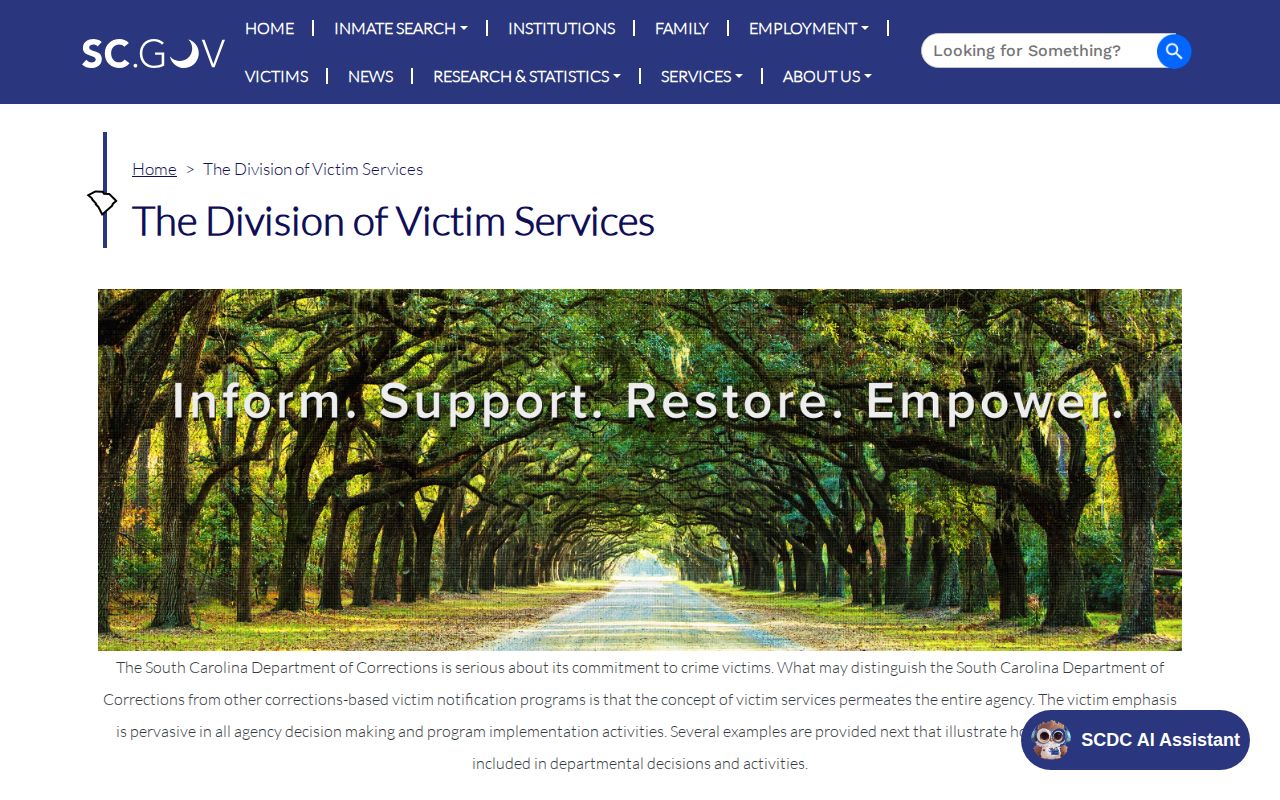
This state layer is distinctive because it provides a direct backup for SCDC location and projected-date questions, while county release confirmation remains with Chesterfield officials.
Confirm Chesterfield Release Notices
Start with the custodian shown in the matched record. If it is SCDC, check the separate released-inmate search for a completed state-prison release. If it is a Chesterfield facility, request the existing jail release entry. That record may identify the release time, disposition, and receiving agency, if those fields are maintained and disclosable. The South Carolina Public Index can then clarify bonds, charges, court dates, and disposition entries, but a court entry does not prove the time someone physically left custody.
A transfer needs special care. Someone can leave the Detention Center for SCDC, another county, federal custody, or immigration custody. Likewise, state imprisonment can end while parole supervision begins. VINELink warns against sole reliance because agency transmissions can be delayed and each status describes only one part of the custody chain.
- Release
- The end of custody by one facility, which may still lead to another custodian.
- Transfer
- A move between custodians rather than a return to the community.
- Discharge
- The formal end of a sentence or supervision status recorded by the responsible agency.
- Parole
- Release from prison while part of the sentence continues under community supervision.
Note: A missing or delayed VINELink alert is inconclusive; verify the event through the jail, SCDC, court, or receiving agency.
Chesterfield County Release Record
The county record is the strongest follow-up when VINELink returns a Chesterfield jail change. The Sheriff's Booking Records Requests page says booking records are not immediately online. It offers a phone check for possible arrests during the prior 12 hours, but that is not a release-status line. For records over a chosen period, the Sheriff directs people to request booking reports in person at the Detention Center during business hours.
Frame the inquiry around an existing record. Give the person's full name, a precise booking or date range, and the known holding agency. Ask whether an existing release entry shows the release date and time, disposition or authority, bond information, holds or transfers, booking number, and receiving agency. Those are useful request fields, not a promise that every item exists or can be disclosed.
The jail record and court record serve different roles. The release entry documents the facility event. The Chesterfield Public Index can retain bond, charge, date, action, motion, and disposition information after a person leaves custody. A dismissal or not-guilty result belongs to that court history. Neither a VINELink notice nor a court disposition supplies the exact physical exit time unless the responsible agency records it there.
Chesterfield SCDC Release Check
For an SCDC prisoner connected to Chesterfield County, use three state channels in sequence. The current SCDC offender portal establishes current state custody and may show a projected release date. SC VINE provides informational location and change notices. After release, the SCDC Released Inmate Search supplies the distinct completed-release route.
The released search requires a start date, end date, and County selection, with an optional Sex Offender filter. Results appear ten per page and an export can provide more detail. A Chesterfield County filter in that system identifies a state-prison release associated with the county field. It must not be described as proof that someone was released from the Chesterfield County Detention Center or Work Camp.
SCDC's current portal runs on a prior-midnight snapshot. SCDPPPS community-supervision results also reflect the previous day. These update points explain why the systems may disagree briefly. Parole means state prison custody ended while a sentence continues under supervision. Probation is court-ordered community supervision and may occur without an SCDC prison stay. A VINELink “release” result alone does not show whether either form of supervision remains.
Chesterfield Release System Boundaries
Use the system that matches the custodian. A federal prisoner is checked through the BOP Inmate Locator, where a past release date and “RELEASED” with no BOP facility indicate the person is no longer in BOP custody. That result does not rule out federal supervision or custody held by another agency. VINELink is not a substitute for that federal record.
An ICE locator result concerns current qualifying immigration custody. A negative match does not prove community release. Likewise, the SLED Sex Offender Registry concerns people who meet registration rules. It is not a broad custody locator, and registration information does not certify a release date. Keeping these channels separate avoids attaching the meaning of one system to another.
The safest sequence is short: match the person, identify the custodian, read the status, and confirm the event with that custodian. When custody changed hands, check the receiving agency as well. This method treats a VINE alert as a prompt for verification, which is the role the service is designed to fill.